App development quotes in Dubai can vary from tens of thousands of dirhams to several hundred thousand because the word “app” covers very different products. A simple customer-facing app with a few screens is not the same project as a marketplace, delivery platform, legal case-management system or ecommerce app with payments, notifications, user roles and an admin dashboard.
Current 2026 Dubai pricing guides commonly place mobile app development anywhere from roughly AED 15,000 at the simple end to AED 500,000+ for complex products. Some enterprise platforms can go higher. The final number depends far more on features, architecture and integrations than on the number of screens alone.
This guide gives you a practical way to budget before asking a developer for a quote and decide how the app fits into your broader digital growth strategy in Dubai.
App Development Cost in Dubai: Quick Answer
| App Type | 2026 Planning Range | Typical Scope |
|---|---|---|
| Simple MVP / utility app | AED 15,000–40,000 | Limited screens, simple data, basic login or forms |
| Standard business app | AED 40,000–120,000 | Accounts, APIs, notifications, dashboard, moderate workflows |
| Advanced marketplace / ecommerce / operations app | AED 120,000–300,000+ | Payments, roles, real-time data, complex backend, integrations |
| Enterprise / large custom platform | AED 300,000–500,000+ | Multiple systems, compliance, high scale, extensive admin tools |
These are planning ranges based on current published Dubai market guides, not fixed quotes. A well-scoped Flutter app may cost less than two separate native apps, while a “simple” idea can become expensive if the backend, admin panel or integrations are complex.
What Actually Determines the Cost of an App?
1. Features and business logic
The biggest cost driver is what the app needs to do. Login, profiles, search, payments, chat, live location, subscriptions, booking, file uploads, analytics and different user roles all add development and testing work.
A feature can look small in the interface but require significant backend logic. For example, an “order status” screen may depend on payments, inventory, notifications, admin actions and database rules behind the scenes.
2. iOS, Android or both
Building separate native applications for iOS and Android means maintaining two codebases. Cross-platform frameworks such as Flutter can share much of the application logic and UI across both platforms, which can reduce duplicated development while still producing polished mobile experiences. If you are choosing a framework, see my Flutter vs React Native comparison for UAE apps. If Flutter is already your preferred stack, my Flutter developer Dubai guide covers architecture, Firebase, Arabic RTL, performance and release planning in more detail.
My mobile app development services in Dubai use Flutter for projects where a shared iOS and Android codebase is the right technical fit.
3. Backend and database
Many apps are only the front end of a larger system. User accounts, permissions, orders, documents, analytics and notifications need a secure backend and database.
Firebase can be efficient for authentication, notifications, real-time data and serverless workflows, while other projects may need custom APIs or an existing enterprise backend.
4. Admin dashboard
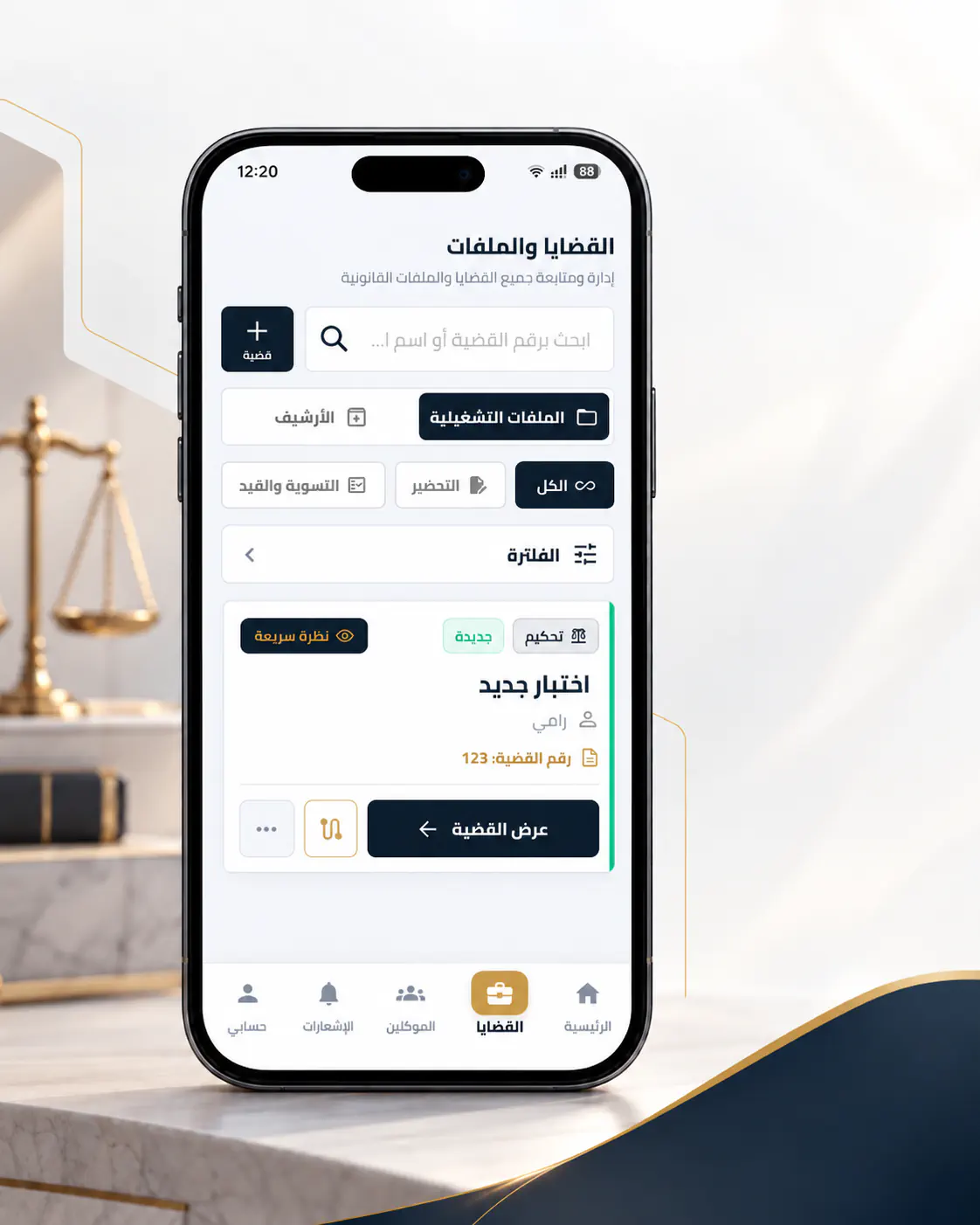
Businesses often focus on the mobile screens and forget the operational side. If staff need to manage customers, products, cases, payments, orders, notifications or permissions, an admin dashboard becomes a significant part of the project.
In systems such as legal, ecommerce or logistics apps, the admin side can be as important as the customer-facing application.
5. UI/UX design
A basic interface built from standard components costs less than a custom product with a complete design system, advanced motion, accessibility requirements and extensive responsive states.
Good UI/UX work also includes user flows, empty states, validation, errors, loading behavior and edge cases—not only the final colors and icons.
6. Integrations
Payment gateways, Google Maps, WhatsApp, ERP systems, CRMs, identity providers, shipping APIs, analytics platforms and third-party databases all add integration and testing work.
The price depends on the quality of the external API as much as the app itself. A well-documented API is easier to integrate than a legacy system with inconsistent data.
7. Arabic and English support
For UAE products, bilingual support is common. Arabic requires right-to-left layout handling, typography checks, navigation changes and testing across different screen sizes. Localization should be designed into the app architecture early rather than added at the end.
8. Security and permissions
Apps handling legal files, payments, private customer data or internal company operations need stronger access control, logging and security review. Granular user permissions and audit trails increase development complexity but may be essential to the product.
Flutter vs Native App Development Cost

Flutter is often cost-efficient when the same product needs to run on both iOS and Android. The team can maintain a shared codebase for most features instead of implementing each screen twice.
Native development still makes sense for products that depend heavily on platform-specific APIs, advanced background services or features where direct iOS and Android control is essential.
| Approach | Strength | Cost Impact |
|---|---|---|
| Flutter | Shared codebase, consistent UI, efficient cross-platform development | Often lower than maintaining two separate apps |
| Native iOS + Android | Maximum platform-specific control | Usually higher because two implementations are maintained |
How Much Does an MVP Cost in Dubai?
An MVP should prove the core business workflow with the smallest useful feature set. It is not simply a cheap version of the final product.
A focused MVP can sometimes fit in the AED 15,000–40,000 range when it has limited roles, a simple backend and few integrations. Once you add payments, chat, live tracking, complex permissions or a custom admin system, the scope moves into higher bands quickly.
The best way to control MVP cost is to define one primary user problem and postpone features that do not affect that first validation.
Example: Why a Business Operations App Costs More
A professional workflow app may need clients, cases or projects, team roles, tasks, documents, notifications, deadlines, payments and activity tracking. Each module also needs permissions, validation, storage and synchronization.
That is very different from a content app that mostly displays information. The interface may look equally simple, but the system behind it is much larger.
Hidden App Development Costs
When comparing quotes, ask what happens after the first build. Common additional costs include:
- Apple Developer and Google Play accounts
- Backend hosting and database usage
- SMS, email or OTP services
- Maps and geolocation usage
- Payment gateway fees
- Third-party API subscriptions
- App Store and Play Store maintenance
- Bug fixes after OS updates
- Analytics and crash monitoring
- Ongoing feature development
A professional quote should explain which recurring services belong to the client and which are included in maintenance.
Freelancer vs Agency for App Development
A strong independent developer or small team can be efficient for a focused Flutter product, especially when communication needs to be direct. An agency may be more appropriate when the project requires several developers, dedicated QA, product management, design and backend specialists working in parallel.
Do not choose only by company size. Ask who will architect the app, who will write the code, who will test it and who will maintain it after launch.
How to Reduce App Development Cost Without Creating Technical Debt
- Start with a written feature list and user roles.
- Separate must-have features from later improvements.
- Use Flutter when cross-platform development fits the product.
- Reuse proven services for authentication, notifications and analytics where appropriate.
- Avoid rebuilding standard functionality without a business reason.
- Design the backend data model before building many screens.
- Test workflows early instead of waiting until the end.
- Keep ownership of source code, accounts and production credentials clear.
What Should Be Included in an App Development Quote?
A useful proposal should specify:
- Platforms: iOS, Android or both
- Technology stack
- Number of user roles
- Main features and workflows
- Backend and database scope
- Admin dashboard scope
- Third-party integrations
- Arabic / English requirements
- Testing and QA
- Store submission
- Analytics and crash reporting
- Source-code ownership
- Post-launch support
App Development vs Mobile Website
Not every business needs an app. If the main goal is publishing content, generating leads or selling a limited catalogue, a responsive website may be faster and cheaper to maintain.
An app becomes more valuable when users return frequently, need push notifications, use device capabilities, work offline, manage complex workflows or need a dedicated logged-in experience. If you are still deciding, compare the product requirement with a strong web design and development approach before committing to mobile development.
Market Pricing Note
Published 2026 Dubai app-development guides show an unusually wide range because app complexity varies so much. Examples include SmartScreenDXB, OrbitVex and Al Wafaa Group. Their public numbers differ, which reinforces the need to compare features and architecture rather than only the final AED figure.
Frequently Asked Questions
How much does a simple app cost in Dubai?
A focused MVP or simple utility app may start around AED 15,000–40,000 in current market guides, depending on design, backend and integrations.
How much does a Flutter app cost in Dubai?
Flutter pricing depends on features rather than the framework alone. A shared cross-platform codebase can reduce duplicated work, but backend complexity, admin tools and integrations still drive the final budget.
Is Flutter cheaper than native development?
It often can be when the same product needs both iOS and Android, because much of the codebase is shared. Native development may still be the better choice for deeply platform-specific requirements.
Does the price include an admin dashboard?
Not always. Confirm it explicitly. For many business apps, the admin dashboard is a separate development workstream.
How long does app development take?
A focused MVP can take weeks to a few months, while complex products can take several months or longer. Feature scope, feedback speed, backend dependencies and store review all affect timing.
Final Thoughts
App development cost in Dubai is driven by product complexity, not by the word “app.” Define the roles, workflows, backend, integrations and admin requirements before comparing quotes.
For businesses that need one codebase across iOS and Android, Flutter can be an efficient foundation when it fits the technical requirements. If you are planning a mobile product, review my mobile app development services in Dubai or send me your feature list for a scoped discussion.

Ali Alkhatib
Informatics Engineer and digital professional working across web development, SEO, Flutter applications and digital growth in Dubai, UAE.