If you are looking for a Flutter developer in Dubai, the important question is not simply whether someone can build screens in Flutter. A production mobile app needs stable architecture, reliable backend integrations, performance testing, analytics, crash monitoring, security and a release process that works across both Android and iOS.
I work with Flutter as part of broader product development, including Firebase, APIs, authentication, notifications, analytics and app-store delivery. For UAE businesses, I also pay close attention to Arabic RTL, bilingual UX, local payment requirements and the operational workflows behind the app.
For broader project planning, see my Flutter app development services in Dubai.
Why Flutter Is a Strong Choice for Dubai Mobile Apps
Flutter is a cross-platform UI toolkit designed to reuse code across operating systems while still allowing apps to interface with platform services. That makes it practical for businesses that want to launch on both iOS and Android without maintaining two completely separate product codebases.
The official Flutter architectural overview explains how the framework supports shared application code while still interacting with native platform capabilities.
Flutter is especially useful when a project needs:
- iOS and Android from one primary codebase
- a highly customized interface
- fast product iteration
- API and Firebase integrations
- real-time data and notifications
- Arabic and English interfaces
- ecommerce or marketplace flows
- internal business or legal workflows
Real Flutter Project: MAQADI Ecommerce App
MAQADI is an example of the kind of product complexity that goes beyond basic mobile screens. The app includes ecommerce categories, products, offers, customer behavior, orders, wallet logic, notifications and multiple visual themes.

Projects like this require more than UI work. The developer needs to think about navigation, state, backend data, caching, payments, user accounts, notification flows and how the app behaves when the network is slow or data changes in real time.
Real Flutter Project: NAFEETH Legal App
NAFEETH is a legal practice management app designed around cases, tasks, sessions, documents, clients, permissions and team activity. This kind of app has a very different architecture from ecommerce because access control and workflow consistency matter more than product browsing.
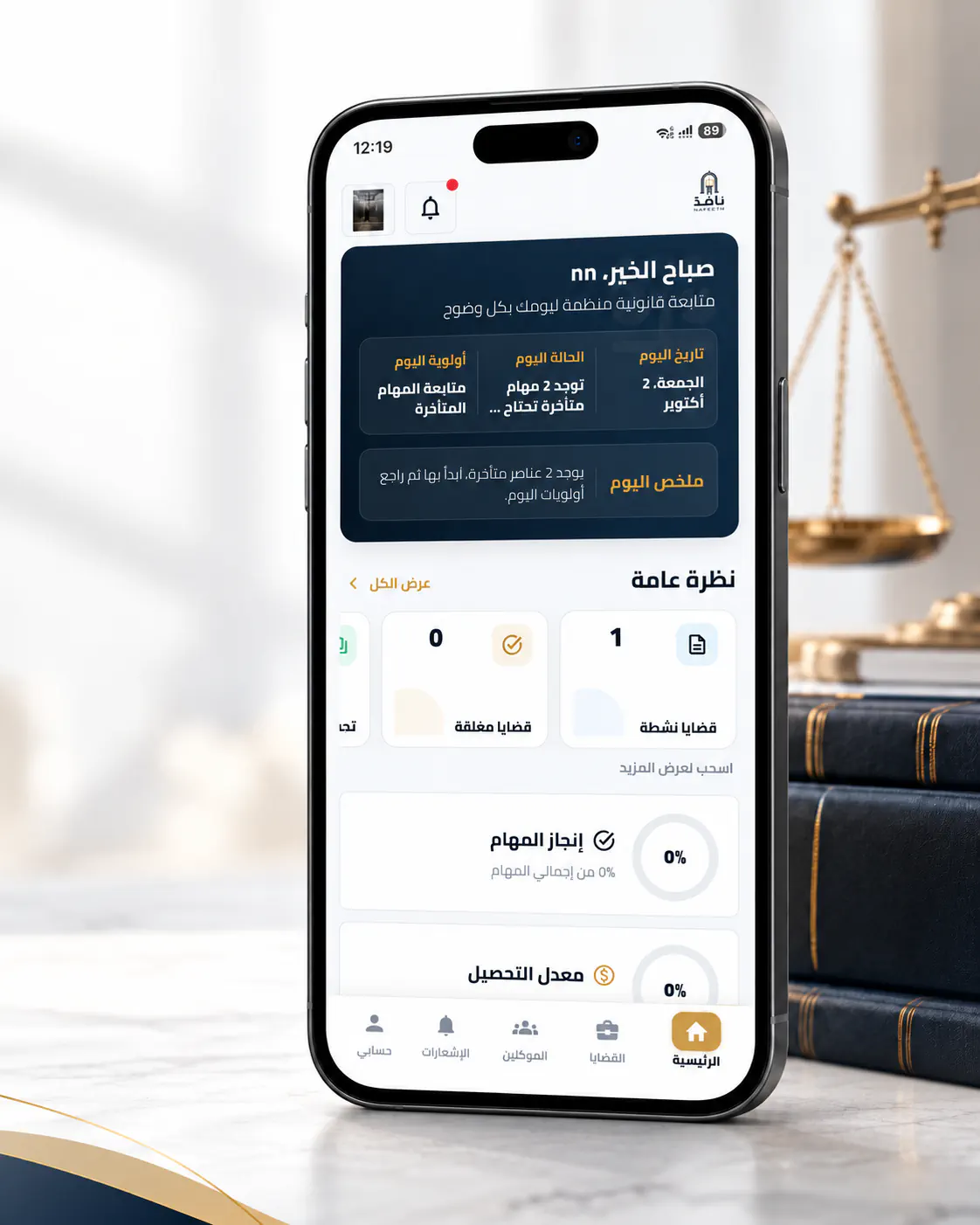
For business apps, the difficult part is often not the screen itself. It is defining who can see or edit each item, when data should refresh, how notifications are triggered and how the system behaves when several team members work on the same records.
Flutter App Architecture Matters Before UI Polish
The official Flutter architecture guidance recommends separation of concerns and clear boundaries between the UI layer and data layer. That matters because apps become difficult to maintain when networking, business logic, database operations and interface code are mixed together.
See Flutter’s official app architecture guide and architecture recommendations.
For a production app, I normally think about:
- feature boundaries
- state management
- API and repository layers
- authentication and authorization
- local persistence and caching
- error handling
- analytics and logging
- environment configuration
- testing and release workflows
Firebase Integration for Flutter
Firebase can cover several common mobile-app needs including authentication, databases, Cloud Storage, messaging, analytics and crash reporting. The exact services should be chosen based on the project instead of enabling every Firebase product by default.
The official Firebase for Flutter documentation covers the supported integrations, while Firebase Crashlytics provides crash and error reporting for Flutter applications.
For production apps, Crashlytics is particularly useful because it helps identify failures users experience after release. Firebase documents the Flutter setup and crash-reporting workflow in its Crashlytics for Flutter guide.
Arabic RTL and Bilingual Flutter Apps
Arabic support should be planned early. It is not enough to translate strings at the end of development. RTL affects navigation direction, icons, text alignment, spacing, input fields and the way mixed Arabic and English content appears on screen.
Flutter provides internationalization support for locale-aware applications. The official Flutter internationalization guide covers locale handling and localized application values.
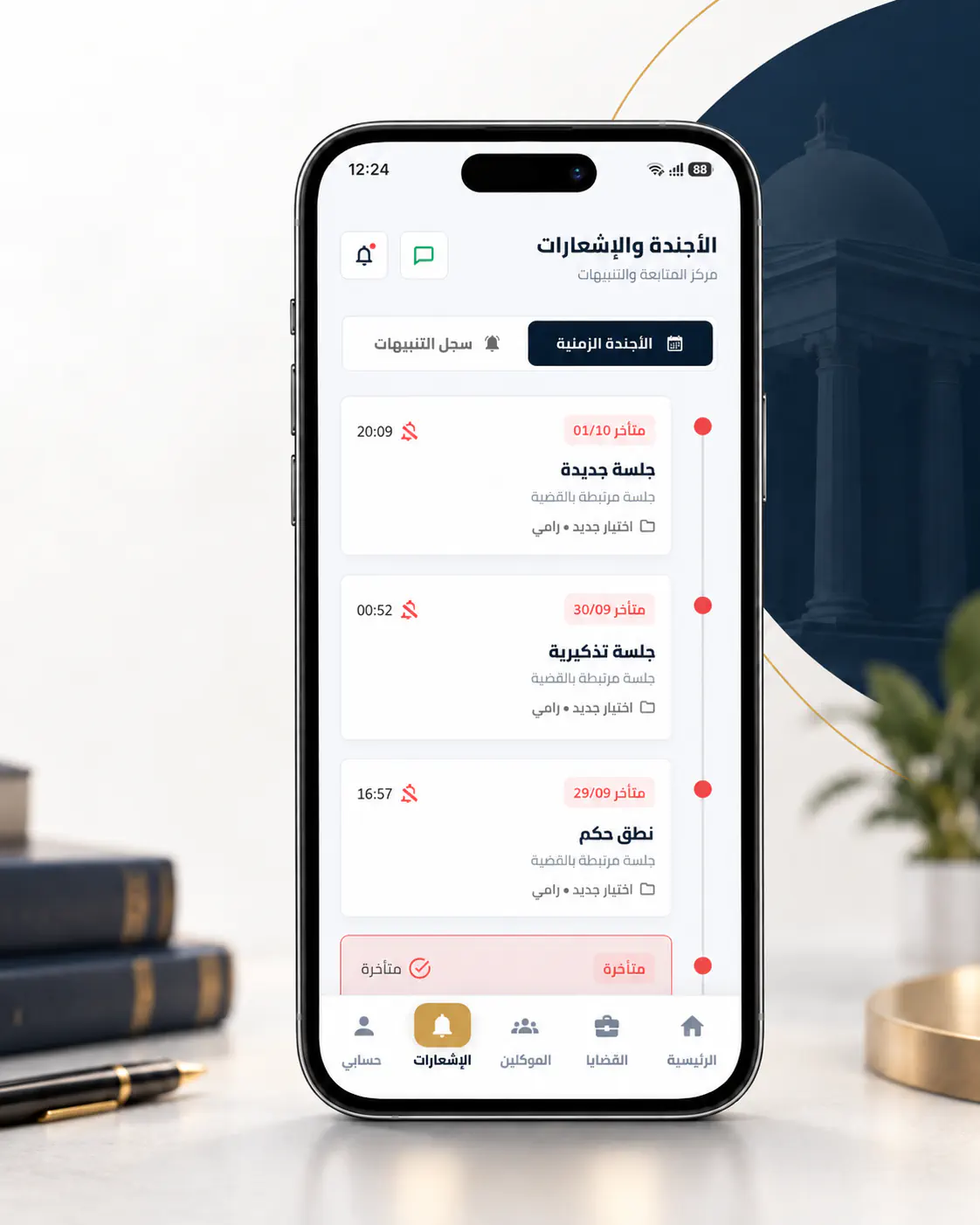
For UAE products, I test real Arabic layouts rather than assuming that mirroring the interface automatically produces a good experience.
Flutter Performance Should Be Measured in Profile and Release Builds
Performance problems can come from excessive rebuilds, heavy widgets, large lists, images, animations or unnecessary work during rendering. Flutter’s documentation recommends measuring rendering performance in profile mode rather than judging performance from debug builds.
The official Flutter performance best-practices guide covers common rendering and build-cost issues.
Performance work can include:
- reducing unnecessary widget rebuilds
- optimizing long lists
- compressing and caching images
- profiling animations
- avoiding expensive layout operations
- testing lower-end devices
- monitoring crashes and ANRs after release
Publishing Flutter Apps to Google Play and the App Store
A project is not finished when the code runs locally. Release signing, app identifiers, store assets, privacy requirements, testing and production build configuration all need to be handled correctly.
Flutter maintains official deployment documentation for both Android and iOS. On Android, Flutter’s release documentation covers building an Android App Bundle for Play Store delivery, while iOS releases use Xcode and App Store Connect.
Flutter vs React Native
Both Flutter and React Native can be strong choices. The better framework depends on the existing team, required integrations, UI complexity, native dependencies, long-term maintenance plan and product roadmap.
I do not recommend choosing a framework based only on popularity. Compare the actual technical constraints and team capabilities. My detailed comparison explains Flutter vs React Native for UAE apps.
How Much Does Flutter App Development Cost in Dubai?
Cost depends on product scope, not only on the framework. A simple informational app, ecommerce platform, legal management system and marketplace can all use Flutter but require completely different amounts of backend work, integrations, testing and product design.
Important cost drivers include:
- number of user roles
- backend and API complexity
- payments and subscriptions
- real-time features
- push notifications
- admin dashboards
- Arabic and English support
- third-party integrations
- analytics and attribution
- store publishing requirements
For broader UAE budgeting, see my guide to app development cost in Dubai.
What to Ask Before Hiring a Flutter Developer in Dubai
- Can you show production Flutter work? Real apps are more useful than demo screens.
- How do you structure the app? Ask how UI, business logic and data access are separated.
- How are crashes monitored? Production apps need visibility after release.
- Can you handle backend integrations? Most commercial apps depend heavily on APIs and services.
- How is Arabic tested? RTL needs real interface testing.
- Who owns the Firebase, Apple and Google accounts? The client should retain control of production assets.
- What happens after launch? Maintenance, SDK upgrades and operating-system changes continue after release.
Frequently Asked Questions
Can one Flutter app run on both iOS and Android?
Yes. Flutter is designed for cross-platform application development, allowing substantial code reuse across iOS and Android while still supporting platform-specific integrations when required.
Is Flutter suitable for ecommerce apps?
Yes. Flutter can be used for ecommerce applications, but the quality of the result depends on backend architecture, checkout logic, payments, catalog structure, performance and testing rather than the UI framework alone.
Can Flutter support Arabic RTL?
Yes. Flutter provides internationalization and RTL support, but the interface still needs careful design and testing for Arabic typography, navigation and mixed-language content.
Can Flutter integrate with Firebase?
Yes. Firebase provides Flutter integrations for services such as authentication, messaging, storage, analytics and Crashlytics.
Final Takeaway
A Flutter developer in Dubai should be able to think beyond screens and animations. Production apps require architecture, backend integrations, performance work, crash monitoring, bilingual UX and a reliable release process.
If you are planning a new mobile product or need help improving an existing Flutter app, review my Flutter app development services in Dubai or contact me with the project requirements.

Ali Alkhatib
Informatics Engineer and digital professional working across web development, SEO, Flutter applications and digital growth in Dubai, UAE.